
Our aspiration: living and working in ecological balance. We do not just say it, we put it into practice consistently.
The MPW head office in Eidenberg will be supplied with 100 % green electricity.
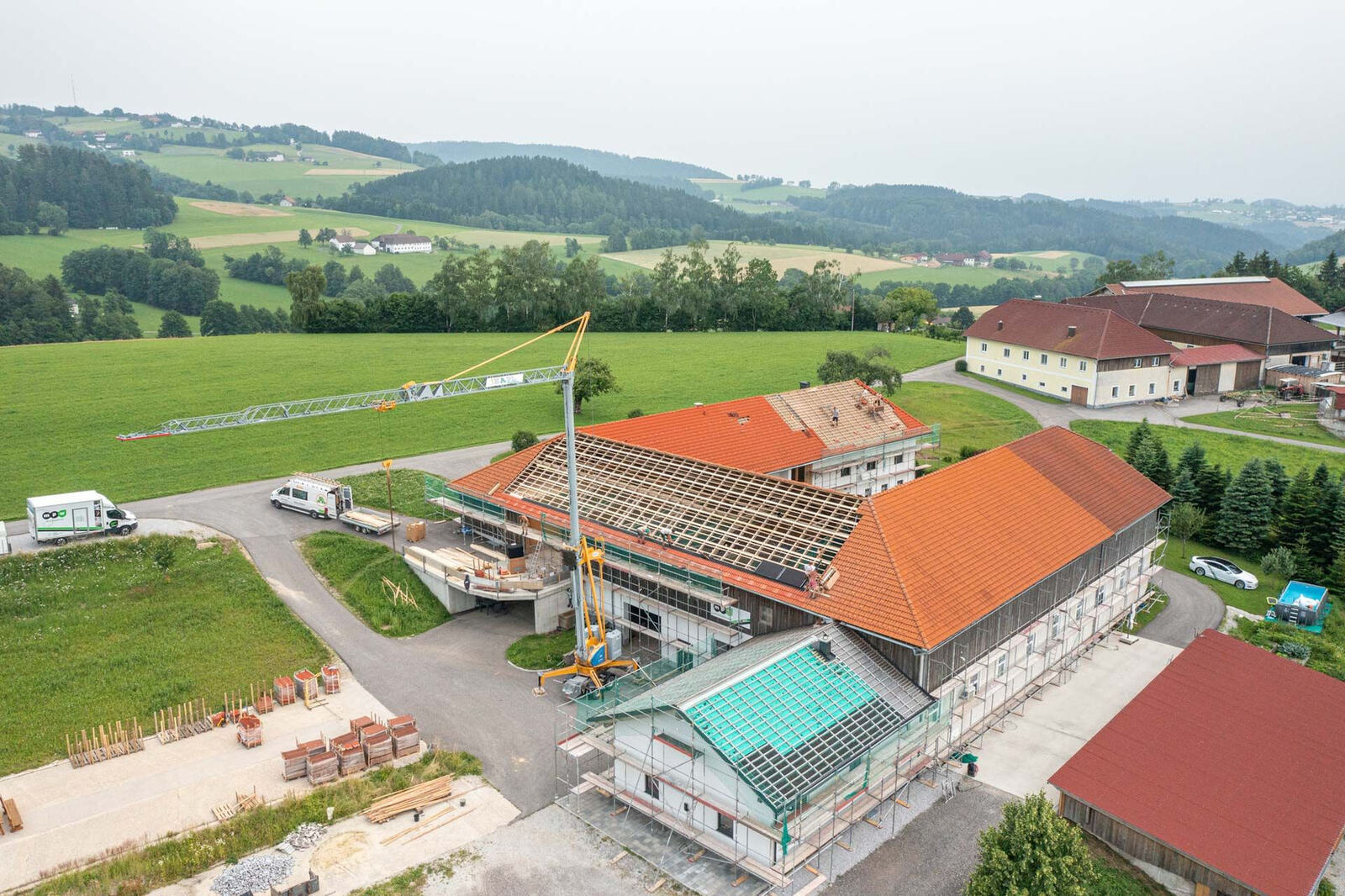
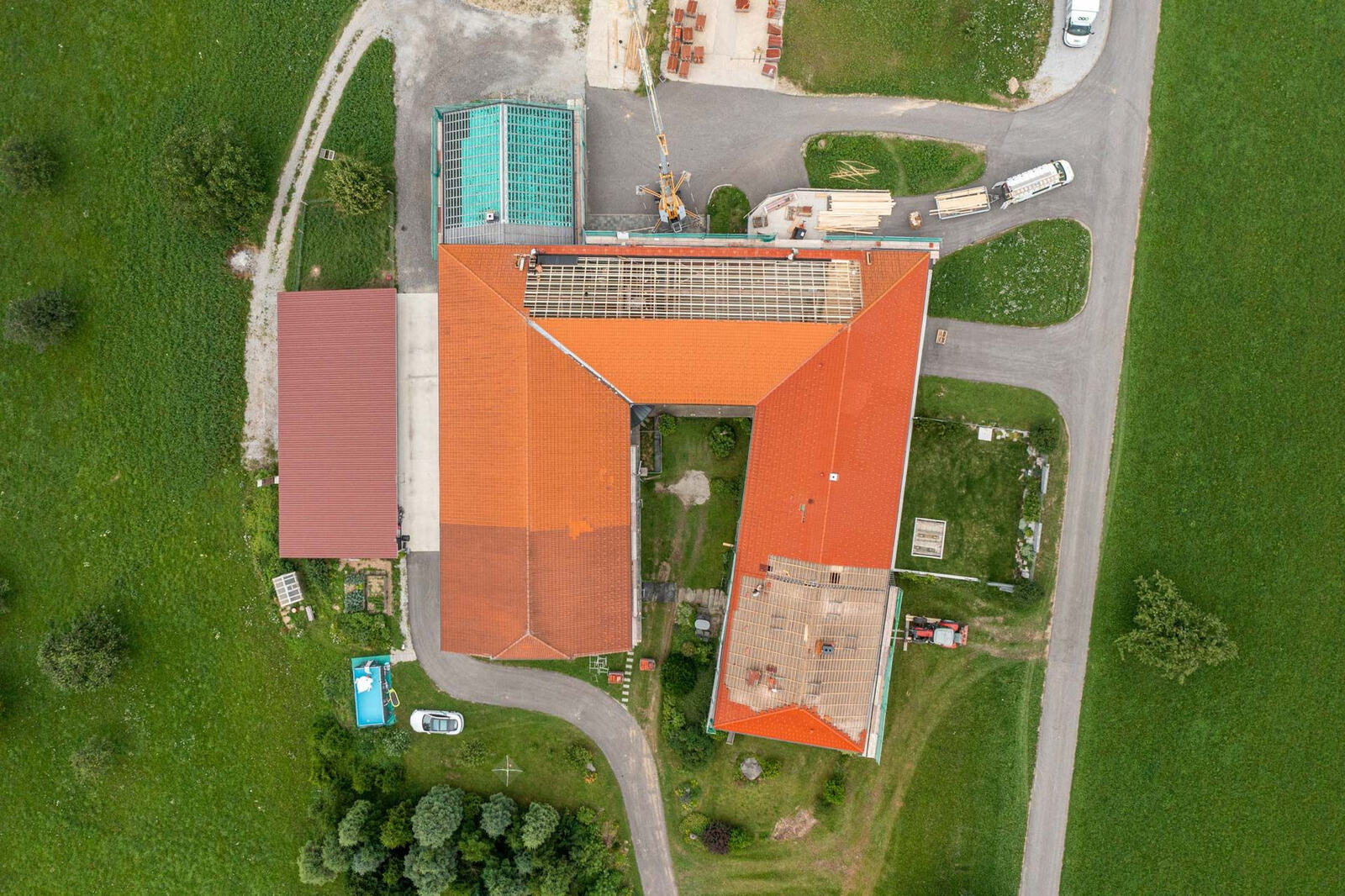
To that end, photovoltaic areas were installed on the roof of Martin P. Weixlbaumer’s parental farm; at around 1,200 m² they will deliver 200 kilowatt-peak once fully built. Two thirds of the system is an in-roof variant replacing the tiles, and a further 1,000 m² of tiled surface was fitted with an on-roof solution. Construction started on 12 July 2021 and the system is due to go into operation in the autumn.
MPW wants to become energy self-sufficient
The solar power is used for our own needs and for heating water, and the companies renting space here as well as the MPW co-working space are supplied with the solar energy we generate ourselves. Several company electric cars already run on 100 % solar power from the MPW roof. Because we use existing roof areas for the photovoltaic system, no additional ground was sealed, and following the amendment of the Renewable Energy Expansion Act (EAG) we will also be able to supply consumers in the surrounding area with 100 % green electricity. A storage unit is already part of our plans for the future.
With our commitment we also make an important contribution to the Upper Austrian photovoltaic strategy 2030. Ours is one of the 200,000 planned photovoltaic roofs.
Preparations for the sixth construction phase are already in full swing. Further phases are planned and will follow. Our goals are clearly defined and the master plan is taking shape.
By 2023 we will have turned the parental farm into a modern location for one-person businesses and small and medium-sized enterprises.
Technical data
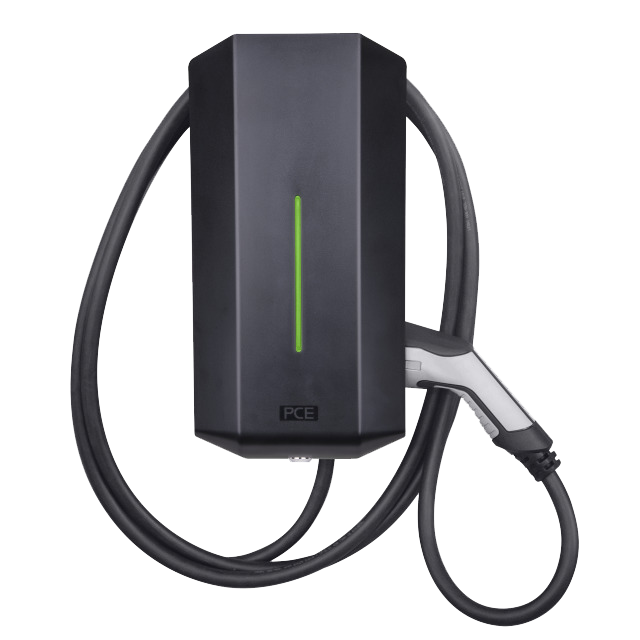
24/7 charging station option – Gewerbehof RFID card
Advantages of the Gewerbehof RFID card
| Max. charging power | Item no. | Cost/hour | Cost/minute |
|---|---|---|---|
| 3.7 kW | 134500 | €1.20 | €0.02 |
| 11 kW | 134501 | €3.00 | €0.05 |
| 22 kW | 134502 | still in production | still in production |
| 43 kW | 134503 | still in production | still in production |
| 50 kW | 134504 | still in production | still in production |
| >50 kW | 134505 | still in production | still in production |
Up to 25 % off charging your electric car in combination with one of our co-working packages.
Energy community
Martin Peter Weixlbaumer is working towards founding an energy community in the spirit of the EAG.*
* Legal basis
EAG § 79 contains the general provisions for renewable energy communities:
(1) A renewable energy community (REC) may generate, consume, store or sell energy from renewable sources. It is also permitted to be active in the field of aggregation and to provide other services.
(2) Members or shareholders of an REC are natural persons, municipalities, bodies governed by public law in respect of local offices, other legal persons under public law, or small and medium-sized enterprises. RECs may be organised as an association, a cooperative, a partnership, a corporation or a similar body. Their primary purpose is not financial gain; where this does not already follow from the legal form, it must be set out in the statutes. The REC is intended to bring its members ecological, economic and social benefits. Participation is voluntary, and in the case of private undertakings it must not constitute their principal commercial or professional activity.
(3) By the end of the first quarter of 2024 the regulatory authority must publish a cost-benefit analysis in order to establish whether an appropriate and balanced participation of renewable energy communities and citizen energy communities in the system costs is ensured. This includes in particular the cost of balancing energy. Grid operators, renewable energy communities and citizen energy communities must provide the regulatory authority with the data required for this purpose.
EAG § 80 deals with funding for renewable energy communities. In addition to funding for installations, a market premium may be granted for a maximum of 50 % of the renewable electricity generated within an REC and not consumed there.
ElWOG § 16c governs the details of participation in renewable energy communities and the proximity criterion:
(1) Generators may participate in renewable energy communities provided they are not controlled by a supplier, provider or electricity trader.
(2) Generators and consumers in a renewable energy community must be connected via a low-voltage distribution grid and the low-voltage section of the transformer station (local area), or via the medium-voltage grid and the medium-voltage busbar in the substation (regional area), within the licensed area of one grid operator.
(3) Grid users are entitled to be informed within 14 days which part of the distribution grid their consumption or generation installations are connected to.
Source: energiegemeinschaften.gv.at